
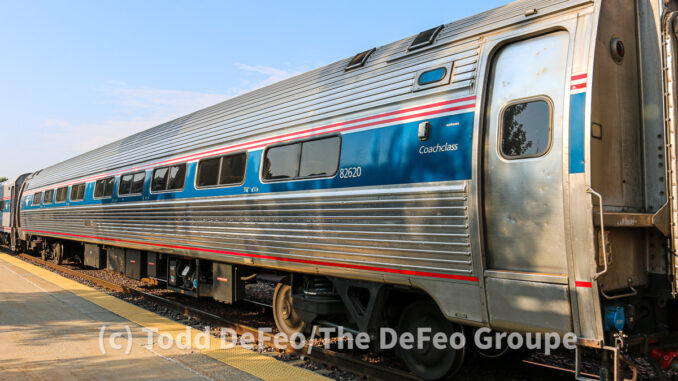
WASHINGTON – Amtrak is announcing a revised long-distance fleet replacement strategy that prioritizes fleet standardization, broadens competition among potential carbuilders, reduces program risk, and accelerates the replacement of its aging passenger cars.
The passenger railroad made the announcement following what it called a “comprehensive evaluation” and reflects extensive analysis of the challenges associated with operating a hybrid fleet. It also incorporates industry feedback from the previous request for proposals for new bi-level trains, along with findings from a joint Amtrak-Federal Railroad Administration review that identified the most effective path forward.
Under the plan, all long-distance routes will transition to a universal single-level fleet, replacing today’s mix of bi-level and single-level equipment.
Amtrak will soon issue a formal request for suppliers to bid on the new long-distance fleet replacement contract and cancel the bi-level procurement. Once a selection is made, Amtrak will work closely with the selected car builder to finalize the delivery schedule to replace our long-distance aging fleet.
Many of Amtrak’s current long-distance railcars were delivered more than 40 years ago. Amtrak will continue to evaluate the condition of the existing fleet, assess its remaining service life, and determine any necessary life-extension measures to ensure safe and reliable operations until the new long-distance fleet enters service.
Procurement of new long-distance passenger cars represents one piece of Amtrak’s broader systemwide fleet modernization program. Amtrak continues to receive new high-powered ALC-42 locomotives for long-distance service, with 79 of 125 units delivered to date.
New NextGen Acela trains launched last fall on America’s only high-speed rail corridor, and the new Airo fleet will begin service on Amtrak Cascades in 2026, followed by the Northeast Regional and other short- and mid-distance routes in the coming years.