
NEWARK, New Jersey — Two decades ago, NJ Transit officials were studying how to replace the aging Portal Bridge over the Hackensack River, hoping to eliminate a notorious railroad bottleneck before a new Hudson River tunnel opened in 2016.
The tunnel was never built, and now, after decades of planning and work, the bridge replacement is in the home stretch.
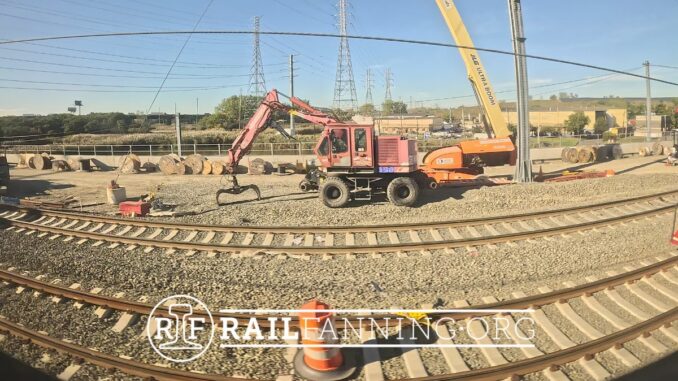
On Oct. 9, Amtrak and NJ Transit began the final phase of transferring passenger trains from the 116-year-old Portal Bridge to its replacement, the new Portal North Bridge. The work is expected to continue into November, when the final track is scheduled to enter service, and the old swing bridge will be retired.
The work involves connecting track, electrical and signal systems to the new bridge, requiring temporary changes to train schedules.
The Road to 2026
The existing two-track bridge opened in 1910, when the Pennsylvania Railroad expanded its passenger operations into New York City. The bridge carried one of the busiest sections of the Northeast Corridor, used by Amtrak and NJ Transit trains traveling between Newark and New York.
While its movable span allowed boats to navigate the Hackensack River, it has become a recurring source of trouble in recent years. That includes a July 2006 malfunction in the mechanism that locked the bridge into position for train movements, which canceled 22 peak-period trains.
Railfanning.org reported on Aug. 4, 2006, that NJ Transit’s board had awarded a $3.3 million contract to AKRF Inc. to study options for improving the crossing.
Officials wanted to eliminate the mechanical problems while increasing the railroad’s capacity, and the proposed improvements were also connected to another major transportation project.
At the same time, NJ Transit was advancing plans for a new tunnel beneath the Hudson River, initially promoted as the Trans-Hudson Express Tunnel and later developed as the Access to the Region’s Core project.
The bridge and tunnel improvements were intended to work together, allowing more trains to operate between New Jersey and Manhattan. In 2006, officials expected to complete the bridge replacement in time for the tunnel’s projected 2016 opening.
Changing Plans
In December 2008, the Federal Railroad Administration issued a record of decision approving an alternative that included a three-track fixed bridge north of the existing crossing and a two-track movable bridge on a new southern alignment.
The estimated cost was $1.344 billion, and construction was expected to take approximately 66 months. But the larger transportation program encountered financial and political difficulties.
By 2010, estimates for the Access to the Region’s Core tunnel had increased substantially. The federal government estimated the project could cost between $9.8 billion and $12.4 billion.
Republican New Jersey Gov. Chris Christie withdrew the state’s support in October 2010, citing concerns about potential cost increases and the state’s financial condition. While the tunnel project was canceled, officials said the need to replace Portal Bridge remained.
Federal and regional officials subsequently developed the Gateway Program, a broader initiative to improve and expand passenger rail infrastructure between Newark and New York.
The Portal North Bridge replacement became one of its major components, taking the form of a two-track, high-level fixed bridge rather than the larger arrangement approved in 2008. At roughly 50 feet above the river, the new structure eliminates the need to open the bridge for most marine traffic.
In December 2020, the NJ Transit board of directors approved a $1.8 billion plan to replace a 110-year-old movable bridge over the Hackensack River on the busy Northeast Corridor. The following month, federal officials finalized a $766.5 million funding agreement for the project.
That October, NJ Transit awarded a nearly $1.56 billion construction contract to the Skanska/Traylor Bros. joint venture.
The Construction Phase
Construction proceeded while the original bridge continued handling passenger trains.
In March 2026, Amtrak and NJ Transit transferred the first track to the new structure. The second and final transfer began Oct. 9. Amtrak and NJ Transit expect regular schedules to resume Nov. 15, if testing is completed successfully.
Once both tracks are operating over Portal North Bridge, the original swing bridge will no longer carry trains.
Officials caution that the new bridge alone does not provide all the additional capacity envisioned in the larger Gateway Program. Officials contend that other projects, including new Hudson River tunnels and additional track infrastructure, remain necessary.


Be the first to comment