Railroads only implemented Positive Train Control (PTC) on 10,163 of nearly 57,848 required route miles between Q1 2009 and Q4 2016. However, they increased the number to 45,933 miles between the close of 2016 and the close of 2018, federal officials said.
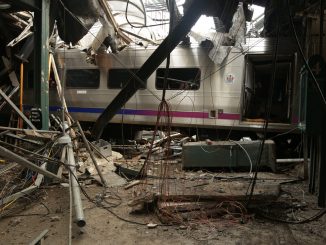
So-called “safety-sensitive” railroad personnel should be screened for obstructive sleep apnea, and technology such as positive train control should be used in terminal stations to improve the safety of operations, the National Transportation Safety Board (NTSB) said in a new ruling.
The federal government is expecting railroads to implement positive train control (PTC) systems by the Congressionally mandated Dec. 31 deadline, Transportation Secretary Elaine L. Chao said in a letter.
More than 1,926 first responders in 18 cities in 13 states across Norfolk Southern’s network trained with the Norfolk Southern Safety Train, the railroad said.
The administrator of the Federal Railroad Administration is calling for greater action to prevent fatalities at the nation’s more than 200,000 railroad crossings. The call from Sarah E. Feinberg comes several significant incidents in recent weeks that have killed parents and their children at railroad crossings. “Over the last six weeks, there have been three significant, tragic railroad crossing incidents. Each took the lives of parents and young children,” Feinberg said in a release. “In San Leandro, California, a mother and her 3-year-old child were killed. In Colorado, a mother, a father and three of their four young children were killed on the way
Union Pacific said it reduced railroad crossing accidents 3 percent in 2015 to 2.28. That is the total number of Federal Railroad Administration reportable grade crossing accidents per million train miles, the railroad said earlier this month. Launched in 2015, Union Pacific’s Crossing Assessment Process (CAP) focuses attention on crossings with certain characteristics where incidents may be more likely to occur. While all Union Pacific crossings that comply with company maintenance standards are safe for the traveling public, drivers continue to make mistakes at some of them. CAP helps identify those crossings and find safety enhancements. “Our initial review showed 25 percent