ATLANTA – The Metropolitan Atlanta Rapid Transit Authority said it safely and efficiently provided 4.7 million rail passenger trips over 35 days of FIFA World Cup 2026 matches, fan festivals, concerts, events, and the Peachtree Road Race on July 4.
The busiest day on the MARTA system was Wednesday, June 24, for the Morocco vs. Haiti match when MARTA provided approximately 240,000 rail passenger trips, which is about 2.6 times the number of trips seen on a typical weekday. The England vs. Democratic Republic of the Congo match the following Wednesday, July 1, had the second-highest ridership of the tournament, with 230,000 rail passenger trips, which is about 2.5 times the typical weekday ridership.
On match days, MARTA experienced approximately 2 to 3½ times its normal daily rail ridership, generating an average of nearly 130,000 additional rail passenger trips. Overall ridership demand was strongest at SEC District (38%), followed by Peachtree Center (30%), Five Points (18%) and Vine City (14%).
Fan festival-only days generated an average of 37,000 additional rail passenger trips per day, resulting in daily rail ridership approximately 1 to 2 times normal. Ridership demand on fan fest days was strongest at Peachtree Center (43%), followed by SEC District (34%) and Five Points (21%). Due to the security perimeter around fan fests, ridership in Vine City (2%) did not increase.
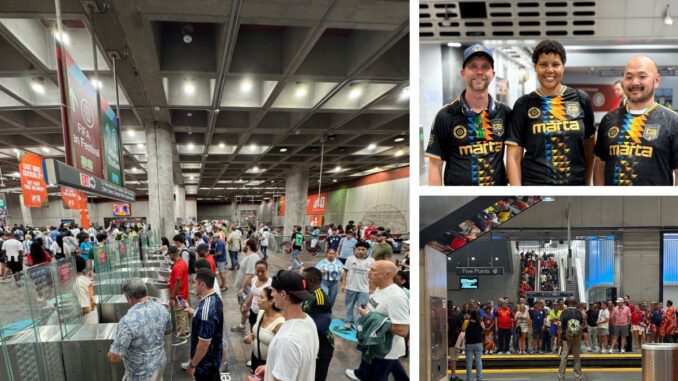
Six hundred MARTA Transit Ambassadors worked a total of 6,400 assignments, assisting customers on match and fan fest days, and stepping up to take shifts when new events were added to the schedule or planned celebrations extended. One hundred multilingual FIFA volunteers joined ambassadors throughout the tournament to help visitors navigate the MARTA system and downtown area. Additionally, members of MARTA’s Safety Department worked at public health tables on the system providing water, sunscreen, and first aid to customers.
Hundreds of MARTA police officers, along with law enforcement support from Denver transit and local jurisdictions, provided thousands of hours of security coverage patrolling trains, platforms, stations, buses, bus transfer hubs, and parking lots, as well as staffing the Mobile Command Vehicle, the Real-Time Crime Center, and the Emergency Operations Center virtually around the clock for over a month. These efforts, which included 10- and 12-hour shifts six days a week, resulted in no major crimes reported and the apprehension of three criminals wanted for previous violent incidents.