
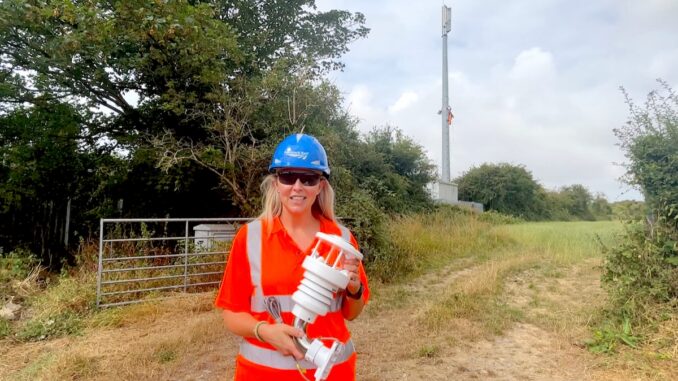
Network Rail’s Wales and Borders route has become the first in the organization to install local weather stations on existing GSM-R railway communication masts, providing more accurate, real-time information to help teams respond to severe weather.
Ten stations have been installed across Wales and Borders, measuring rainfall, wind speed and direction, temperature, humidity and atmospheric pressure directly from locations on the railway.
The technology, developed by Ninehundred Communications Group, draws on lessons learned from a series of severe weather events that have caused significant disruption and cost to the railway.
Between February 2023 and January 2026, 25 named storms affected the Wales and Borders route. Where complete performance data is available, each storm caused an average of more than 38 hours of delays and £179,000 in train performance costs.
Storm Darragh was the most costly, at £1.3 million. When it hit Wales on 6 and 7 December 2024, winds reached 93mph at Capel Curig, and fallen trees and debris disrupted services across much of the country.
The investment comes as the Met Office forecasts a higher chance of wetter and windier-than-average conditions through late autumn and early winter, due to weather patterns like El Niño.
The stations have been installed at Whitland, Llantwit, Cilmeri, St George’s and Trewyn in south and mid Wales, and Craven Arms, Gobowen, Glantwymyn, Llanrwst and Buckley across north Wales and the Borders.
The locations were selected to fill gaps in existing weather monitoring and provide better information in areas vulnerable to severe weather.
Network Rail already works with weather forecasting specialists MetDesk to monitor conditions and anticipate severe weather. The new stations will enhance this by providing local readings directly from the railway, giving operational teams a clearer picture of the conditions being experienced on the ground.
Using existing GSM-R communication masts provides the required height for observations while avoiding the cost and complexity of separate installations.
Data from the stations will also help MetDesk improve its forecasts and Network Rail refine its operational weather thresholds, giving teams greater confidence about when and where severe weather could affect the railway. This could enable a more targeted response — from deploying teams and inspections to deciding when measures such as speed restrictions are needed — helping keep the railway safe while reducing unnecessary disruption for passengers.
Be the first to comment