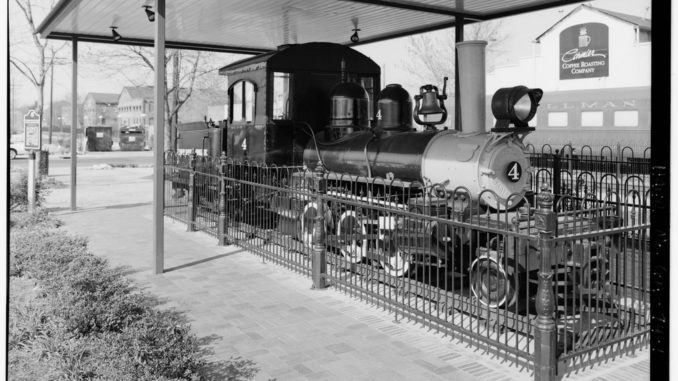
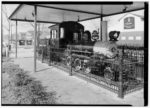
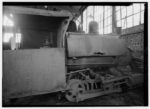
A restored locomotive built in 1916 by the Glover Machine Works (Historic American Engineering Record/Public Domain)
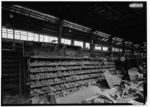
The pattern warehouse at Glover Machine Works (Historic American Engineering Record/Public Domain)
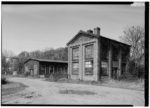
A view of the Glover Machine Works (Historic American Engineering Record/Public Domain)
A close up view of tools at the Glover Machine Works (Historic American Engineering Record/Public Domain)
The interior of the archives room at Glover Machine Works (Historic American Engineering Record/Public Domain)
The interior of the pattern storage building at Glover Machine Works (Historic American Engineering Record/Public Domain)
A lab building at Glover Machine Works (Historic American Engineering Record/Public Domain)
An exterior view of the Glover Machine Works (Historic American Engineering Record/Public Domain)
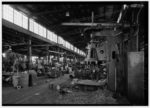
Inside the Glover Machine Works (Historic American Engineering Record/Public Domain)
An inside view of the Glover Machine Works (Historic American Engineering Record/Public Domain)
A restored locomotive built in 1916 by the Glover Machine Works (Historic American Engineering Record/Public Domain)
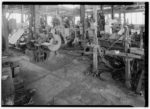
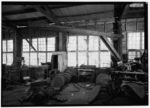
Machinery inside the Glover Machine Works (Historic American Engineering Record/Public Domain)
A section of saw tooth storage at the Glover Machine Works (Historic American Engineering Record/Public Domain)
A locomotive inside the Glover Machine Works (Historic American Engineering Record/Public Domain)
Equipment and tools at the Glover Machine Works (Historic American Engineering Record/Public Domain)
A crane inside the Glover Machine Works (Historic American Engineering Record/Public Domain)
A view of the historic Glover Machine Works (Historic American Engineering Record/Public Domain)
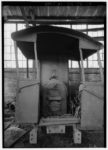
A view inside the cab of a locomotive at the Glover Machine Works (Historic American Engineering Record/Public Domain)
MARIETTA, Ga. — Glover Machine Works was never as big of a locomotive builder as Baldwin Locomotive Works or American Locomotive Co. (ALCO).
The company built 200 locomotives between May 6, 1902, and April 19, 1930. But, more than anything, its impact on helping the south recover after the Civil War is immeasurable.
Today, there are few remnants of this fascinating locomotive builder. Its historic 11-acre campus in Marietta, where the company moved in 1903, was razed in 1995, but its archives, patterns and locomotive parts survive at the Southern Locomotive of Civil War and Locomotive History in nearby Kennesaw, Ga.
The history of Glover Machine Works starts in 1892, when James Bolan“Bolie” Glover II bought the Phoenix Foundry and Machine Shop. In 1895, he changed the name of the company to Glover Machine Works.
Some of the more interesting tidbits about Glover Machine Works:
The company built only one passenger locomotive. No. 131818, a 2-6-2 steamer, was built in 1923 for the Cliffside Railroad.
Glover No. 81421, a locomotive built in 1916 or 1917, is on display in Glover Park in downtown Marietta. The 2-6-0 mogul locomotive, which today carries No. 4, was sold to the Coulbourn Bros. for use in logging operations and returned to Glover in September 1923 for resale.
Engine No. 7128 was shipped to Splint Jellico Coal Co. on June 30, 1926. In December 1927, the locomotive was repossessed and returned to Marietta where it sat for 70 years. The steamer was restored between 2001 and 2003 and is today on display in the Southern Museum.
Locomotive Nos. 561 and 562 have the distinction of being the smallest locomotives built by Glover. The 2-foot-gauge, 8,200-pound steamers were ordered in 1916 by the United States Navy and delivered the following year.
The first Glover customer was Stratton Brick in Macon, Ga.
Before you copy and paste this information to your website, please keep in mind this research took a lot of effort. Appreciate it. Learn from it. But do not plagiarize it. Yes, if you think we might be talking to you, we are.
Todd DeFeo loves to travel anywhere, anytime, taking pictures and notes. An award-winning reporter, Todd revels in the experience and the fact that every place has a story to tell. He is owner of The DeFeo Groupe and also edits Express Telegraph and The Travel Trolley.
ATLANTA — The latest economic forecast issued in December 2008 for MARTA by the Georgia State Economic Forecasting Center predicts a further worsening of its current fiscal crisis by an additional $10 million, the transit agency said. The forecast also predicts MARTA will experience a cumulative loss of more than $1.2 billion in sales tax revenue over the next ten years – that is up an additional $588 million from its fall 2008 report. “This latest forecast truly underscores the magnitude and severity of the economic times that we are currently dealing with,” said Beverly A. Scott, MARTA General Manager
Amtrak is looking to make Atlanta a railroad hub again, but the quasi-federal agency can’t say how much it will cost to run new routes across the Peach State and the region.