
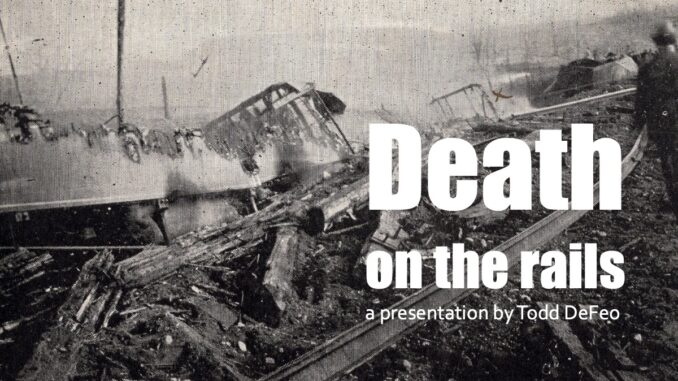
For years, I have gathered and told the stories of “Death on the Rails.” There’s a harsh reality to these tragedies that occurred throughout history.
Few cared. Not the railroads. Not the newspapers. Generally, the public didn’t either. Perhaps their families and close friends did.
Railroads killed people. They resolved the matter, sometimes investigating, other times making payouts, but generally moving on. The stories faded from the newspapers, sometimes astonishingly quickly.
Within days of 101 people dying in a cornfield near Nashville in a head-on train collision 108 years ago this month, the story was off the front page. More than 100 people; in fact, the exact number isn’t known.
Maybe it’s because of the victims. They didn’t fit the profile of what the newspaper wanted to report. Maybe it’s because death was all too common. Maybe it’s because a war was raging in Europe.
For an industry that touts its focus on empathy and telling the community’s story, it surely lacked empathy in this instance. Sadly, it wasn’t the only time, and newspapers don’t have a monopoly on ignoring death and hoping the story goes away.
The amount of death tied to railroads is astonishing. Hundreds. Thousands. Tens of thousands of people were killed. I never thought people would want to hear about this, but it is one of the most popular talks I give.
Fortunately, or unfortunately, I don’t repeat crashes in my talks. There are so many stories; I find new ones for every talk. Given the number of calamities over the years, I could talk for decades without running out of material.
I’m proud of what I’ve accomplished thus far. I projected the names of dozens of people killed in a Georgia wreck, long thought lost to history. I’ve corrected the record about wrecks.
Will you read about it in the local press? No. Apparently, their hypocrisy only goes so far.
In the meantime, I will keep chronicling the wrecks that shaped communities and railroad history.
