
Overview
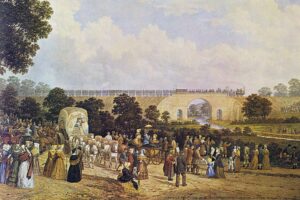
The Liverpool and Manchester Railway was the world’s first intercity railway, opening between its namesake cities on Sept. 15, 1830. Designed and built by George Stephenson, the railway connected the Port of Liverpool with the factories and cotton mills of Manchester and surrounding communities, providing transportation for freight and passengers.
The railway introduced several features that became fundamental to modern railroading. It relied exclusively on steam locomotives rather than horses, was double-tracked throughout, operated to a timetable and employed a signaling system. It also became the first railway to carry mail. Freight traffic serving Liverpool Docks used cable haulage through the steeply graded Wapping Tunnel.
Quick Facts
- Founded
- 1830
- Ended
- 1845
- Headquarters
- Liverpool, England
Happening
September 15, 1830
Liverpool and Manchester Railway Opens
The Liverpool and Manchester Railway became the world’s first inter-city railway when it opened on Sept. 15, 1830.