For this second episode of “People and Places of the Western & Atlantic Railroad,” we’re in historic Dalton, Georgia. Today, we focus on the railroad and its role shaping this North Georgia city.
Click here for People and Places of the Western & Atlantic Railroad: Episode 1: Smyrna, Georgia.
Stay tuned as we “Tour the Historic Western & Atlantic Railroad.”
Before you copy and paste this information to your website, please keep in mind this research took a lot of effort. Appreciate it. Learn from it. But do not plagiarize it. Yes, if you think we might be talking to you, we are.
Todd DeFeo loves to travel anywhere, anytime, taking pictures and notes. An award-winning reporter, Todd revels in the experience and the fact that every place has a story to tell. He is owner of The DeFeo Groupe and also edits Express Telegraph and The Travel Trolley.
The Western & Atlantic Railroad operated some of the earliest locomotives in Georgia and the Southeast. The road, built and owned by the state of Georgia, acquired 10 locomotives during the 1840s.
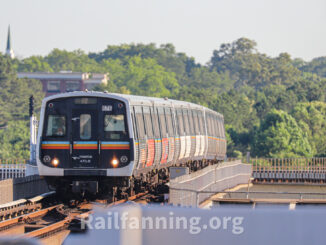
The Metropolitan Atlanta Rapid Transit Authority celebrated the re-opening of its Airport Station on Monday following a six-week closure as part of a multi-million-dollar station update.