
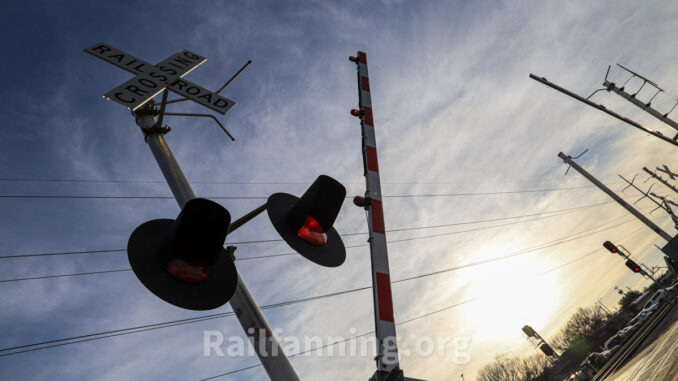
With farmers and agricultural workers across the nation preparing for harvest season, Operation Lifesaver is urging everyone in the agricultural community to make safe choices around tracks and trains.
Every 3 hours in the United States a person or vehicle is hit by a train. A busy harvest season means increased traffic around tracks and trains, especially as workers drive heavy equipment and large loads near or across tracks.
“Trains crisscross the entire country, making rail safety education important for everyone, including farmers, ranchers and other agricultural workers,” said OLI Executive Director Rachel Maleh. “All year, but especially during the busy harvest season, staying alert around tracks and trains and making safe choices is vital. We encourage everyone to review these safety tips and share them within the agricultural community to help prevent incidents.”
There are over 200,000 rail crossings in the U.S., making it likely that agricultural workers will encounter tracks and trains while working. Misjudging the time needed to cross tracks or underestimating the speed of an approaching train can have serious consequences. In any situation, careful planning, cautious driving and rail sign and signal awareness are important steps to take to help #STOPTrackTragedies.
“We are grateful to America’s farmers, who help feed us,” said Maleh. “By knowing and implementing these critical rail safety practices, they can continue their important work while ensuring the safety of themselves and others.”
Harvest Season Safety Tips
- Cross legally and safely: Cross only at designated crossings. Obey all warning signs and signals and ensure you can clearly see down the tracks in both directions before proceeding.
- Always expect a train: Trains do not follow set schedules. They can travel on any track at any time, from either direction. Multiple tracks may mean multiple trains.
- Trains have the right of way: You must always yield to a train. Trains cannot swerve or stop quickly. It can take a train over a mile to stop.
- Know your equipment: Ensure there is enough space for your vehicle and/or equipment to completely clear the tracks before proceeding through a crossing. If operating a low-clearance vehicle, make sure you can drive through the crossing without getting stuck on the tracks.
- Make space and drive with caution: Trains overhang tracks on both sides. Keep at least 15 feet away from tracks at all times. Stay in one gear while crossing. Shifting gears while crossing could cause you to stall on the tracks.
- Secure your load: Check hitch pins to ensure they cannot dislodge while crossing and that your load is secure. Make sure that farm machinery wheels are properly aligned with the railroad crossing surface to avoid tipping and spills.
- Minimize distractions: Trains are faster and quieter than you think. Minimize distractions and noise around tracks and trains.
- Stuck or stalled on tracks? Find the Blue and White Sign: If your vehicle gets stuck or stalls at a crossing, get everyone out and far away immediately, even if you do not see a train. Call the number on the Blue and White Emergency Notification System (ENS) sign and share the crossing ID number with the dispatcher. No sign? Dial 911.