Railfanning.org Publisher and Editor Todd DeFeo on Sunday presented a lecture examining one of the most significant — and often overlooked — events in American railroad history: the 1886 change of the Western & Atlantic Railroad’s track gauge.
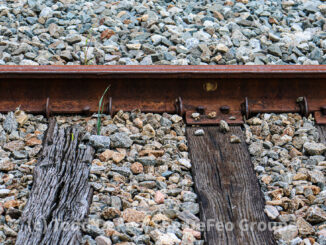
Among the many changes to the Western & Atlantic Railroad since its inception, the change of the line’s gauge in 1886 ranks among the most significant — and also among the most misunderstood.
In early May, Railfanning.org Publisher and Editor Todd DeFeo will explore a chapter of railroad history that is often mentioned, but seldom fully examined.
If you’re expecting a railfanning video to open with a locomotive in the background, this one may throw you off. There are no trains in the shot. No flashing signals. No horn echoing off the buildings.
On the evening of April 17, 1933, a Louisville & Nashville passenger train derailed near Bartow, Georgia. Two railroad men and two trespassers lost their lives, and 11 others were hurt.
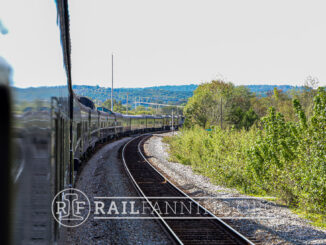
Talk of restoring passenger rail service on the Georgia-owned Western & Atlantic Railroad between Atlanta and Chattanooga, Tennessee, often runs into the same refrain: It would be expensive to “upgrade the line.”
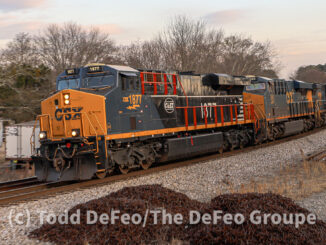
CSX Transportation’s Chicago & Eastern Illinois pulled a northbound freight through Smyrna, Georgia, on the evening of Friday, Jan. 30, shortly after the city unveiled its new Jonquil statue downtown.
About 20 Medal of Honor recipients boarded a special passenger train in downtown Kennesaw on Sept. 30 and headed north along a historic rail line that was the scene of one of the Civil War’s most daring exploits.