- Click here for Part I: Dreaming of Rails in a River Town: The Origins of the Memphis, Clarksville & Louisville Railroad
- Click here for Part II: Surveying the Woods: Engineering, Labor, and the Reality of Building the MC&L
CLARKSVILLE, Tennessee — By late 1859, after years of surveys, grading, and frustrated waiting, the Memphis, Clarksville & Louisville Railroad reached a long‑anticipated milestone: it began operating trains.
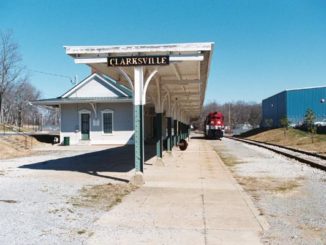
For Clarksville, the sight of a locomotive steaming into town was more than a novelty — it was proof that the city had finally joined the railroad age.
The MC&L’s first locomotives were modest by national standards but awe‑inspiring locally. They arrived amid public excitement, newspaper praise, and a renewed sense of civic pride.
Passenger service followed, carrying residents eager to sample the speed and novelty of rail travel. What had once been an abstract promise of progress now moved, hissed, and clattered through town.
Yet the railroad’s early operations revealed how thin the margin between success and failure truly was. The MC&L was never designed to stand alone.
Its usefulness depended on connections to other lines, particularly those leading toward Louisville. Until those links were fully functional, traffic remained limited.
Freight volumes were inconsistent, and passenger receipts fluctuated with the seasons. Steamboats still dominated river transport, often undercutting rail rates and offering familiar, reliable service.
The MC&L had entered a competitive marketplace without the resources to dominate it.
Mechanical reliability posed another challenge. Locomotives required frequent maintenance, track conditions were uneven, and accidents — some minor, others alarming — were not uncommon. Derailments and breakdowns fed skepticism among critics who had long doubted the railroad’s viability.
Each incident chipped away at public confidence and strained already‑tight finances.
Money, as ever, was the central problem.
Operating revenue failed to keep pace with expenses, particularly interest on mounting debt. Construction had consumed far more capital than expected, and the railroad relied increasingly on short‑term borrowing to stay afloat. Wages were sometimes paid late, and contractors pressed for settlements that the company struggled to meet.
Still, optimism persisted. Railroad advocates pointed to growing traffic, improved schedules, and the symbolic importance of having trains run at all. They argued that once key engineering hurdles, especially the major river crossings, were completed, the MC&L would finally realize its potential as a through route between the Ohio and Mississippi valleys. For a time, that argument carried weight.
The railroad’s leaders projected confidence, even as warning signs multiplied.
The MC&L was operating, but on hope as much as on revenue. Each mile of track brought opportunity, yet each mile also represented sunk cost and deferred obligation. The company was no longer merely trying to build a railroad; it was trying to survive long enough for the railroad to justify its own existence.
In hindsight, this period was the MC&L’s most fragile moment, balanced between ambition and insolvency. The trains ran, whistles blew, and Clarksville celebrated, but the foundation beneath the celebration was unsteady.
The next post follows the railroad to its greatest engineering challenges: crossing the Cumberland and Tennessee Rivers, where triumph and tragedy would travel the same tracks.
This post is adapted from Todd DeFeo’s 2019 book, The Memphis, Clarksville & Louisville Railroad: A History.